AirPods Pro 3 vs Sony WF-1000XM6 Buds, detailed sound quality, ANC and transparency analysis
Apple wins in transparency and mics, but Sony wins in sound and ANC
Sunday, March 29, 2026 - by Soumya Roy
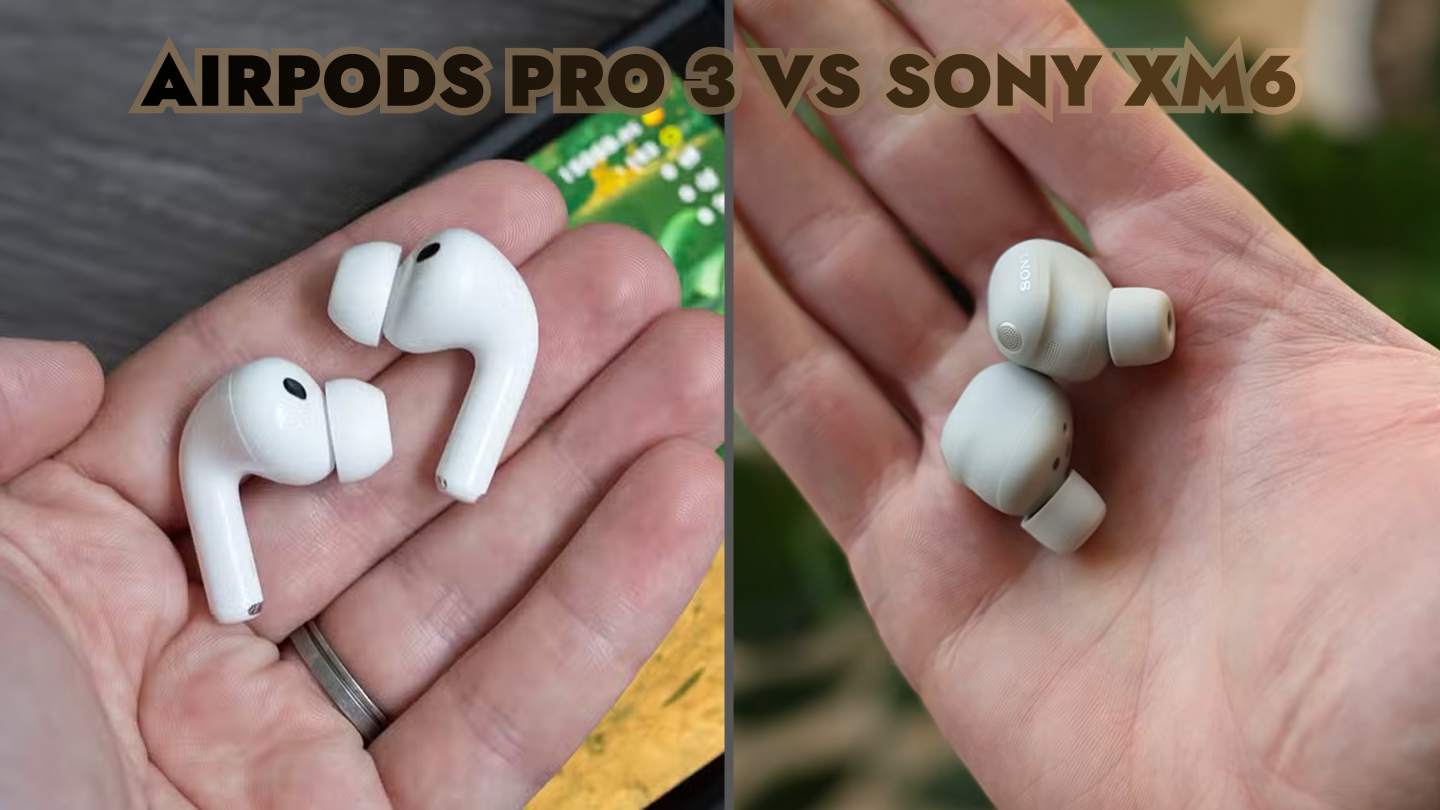
Apple AirPods got my attention with their AirPods Pro lineup where they added silicone eartips. I particularly like earbuds that have eartips. Recently I published couple of articles about these premium Apple and Sony earbuds. You should check out the AirPods Pro 3 vs Pro 2 and Sony WF-1000XM6 VS WF-1000XM5 detailed analysis. I am really curious to find out which earbud is best for what as you probably know that these buds have the best ANC and transparency available. Between Apple and Sony, they are kinda best for different scenarios. One product probably not gonna win at every category. So, in this article, I am going to do a deep dive comparing the sound quality, ANC and transparency between the Apple AirPods Pro 3 and Sony WF-1000XM6 buds.
The over-boosted lows and highs make the AirPods Pro 3 sounding more artificial and processed than natural and tasteful. They still sound good but the Sony WF-1000XM6 buds have a more balanced, relaxed and warm sound signature. AirPods Pro 3 mostly has a bright high-end problem than the crazy sub-bass problem as the very low-end is not present in most songs. The microphone performance and transparency is still better on AirPods Pro 3, but the ANC is a bit better on Sony WF-1000XM6 buds. Both offer similar battery life. The price is $80 higher for the new Sony XM6 buds, it can be a deal breaker. The choice between these two is very tough, but I tried to simplify that at the end.
I usually don't like the stem-like design unless the design is really well-done. I think the buds' design is really good on the AirPods Pro 3, which includes making it small, light, comfortable, secure in your ears and the stick not sticking outward. The main body of the AirPods Pro 3 is small and sleek and the stem or stick has an angle that goes inward close to your face. This is the right way of designing stem-based earbuds. Even some high-end buds don't have the inward angle for the stem, which usually makes the stick looking like it's sticking out and going away from your face - very weird look.
I actually did a dedicated article on the Sony WF-1000XM6 bud's design where I explained why the new case has a worse design compared to previous XM5 model. I also shared my opinion on the bud's design, which is kinda mixed. That means, I kinda like the new pill-shape design of the Sony XM6 buds. But I think that the size is still on the bigger and bulkier side. The pill-shape does a good job of making the buds look smooth and low profile. However, on smaller ears they still look big and a bit in the sticking out territory. So, I am with this new pill-shape design but not with the new bigger case design of the Sony WF-1000XM6 buds. The new case supposed to be smaller, but it's downward with the Sony. Overall, Apple wins in the design aspect, and I think Sony needs a better more compact and sleek case design to stay in the game.
The AirPods Pro 3 has a 10.7 mm custom high-excursion Apple driver in each earbuds. Apple introduces a new multiport acoustic architecture that moves more air through the buds, which significantly improves bass response and clarity compared to the AirPods Pro 2. The ventilated design helps out maintaining the pressure balance and driver movements. On the contrary, Sony WF-1000XM6 buds have 8.4 mm dynamic driver that is driven by QN3e Chip and offer 3 times faster processing than previous XM5 buds. Apple has its H2 Chip that also performs really well for real-time processing. The AirPods Pro 3 has IP57 dust and water resistance vs Sony 1000XM6's IPX4 splash resistance capabilities.
Sound quality is the most important thing to me for a pair of earbuds. I have done a lot of research on available information related to these earbuds like reviews and sound tests. Some of the big reviewers have contradictory opinions. After analyzing those data, I think I have a clear picture of what's actually going on. I will back my analysis up with frequency response data for both the AirPods Pro 3 and Sony WF-1000XM6 buds. My source for the frequency response is lttlabs.com - I think they do a great job of testing earbuds. Now let's take a look at their frequency response.
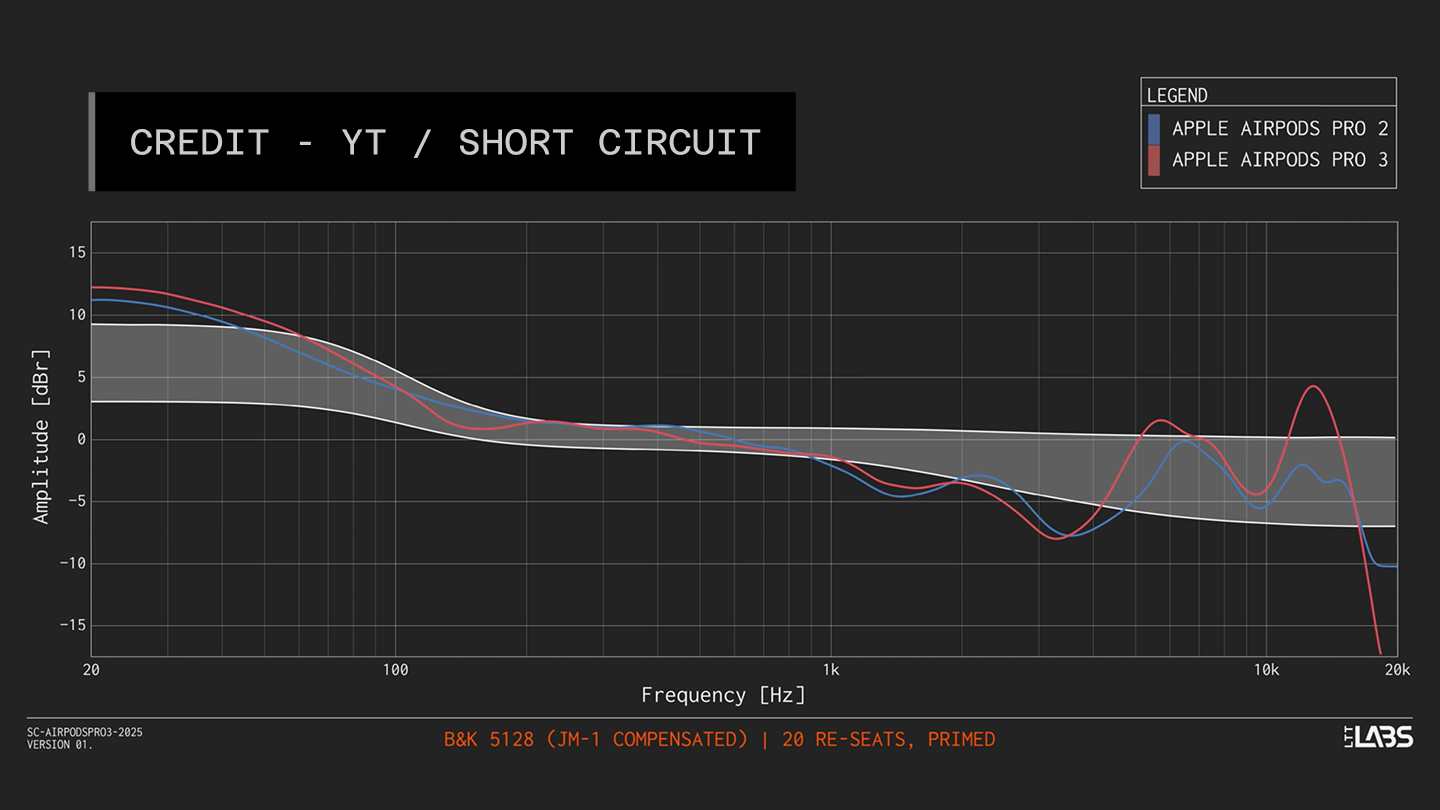
The space between the white lines is the range for average listener preference, and the red or blue curve is the frequency response. The most noticeable difference is that the AirPods Pro 3 has very boosted sub-bass and highs vs the Sony WF-1000XM6 buds don't have that much boost in the lows or highs. So, Sony's frequency response seems to be just okay for the low and high-end. However, a significant fault shows that there is a pretty wide dip between 500 Hz to 800 Hz region on the Sony XM6's frequency response. I am going to explain what kinda problems these peaks and dips will create on the soundstage a little bit later, let's just see the frequency response difference in this para. So, for the AirPods Pro 3, it has an even wider dip between 3 KHz and 4 KHz region - both have noticeable faults in their frequency response.
The low-end boost on the AirPods Pro 3 is extended at the very very low-end towards 20 Hz, this would have been a very good thing if the curve stayed within the preferred range. The high margin within the preferred range is already very bassy and good for bass heads. So, even boosting the sub-bass quite a bit on top of the high margin will certainly be problematic for tracks that have decent sub-bass. You can't listen to that level of boosted sub-bass for a long period of time. To deal with this very strong sub-bass, Apple needed to boost the high-end too on the AirPods Pro 3. I think that the boosted high-end will cause more problems as it will be present in more songs than the very low sub-bass presence in songs.
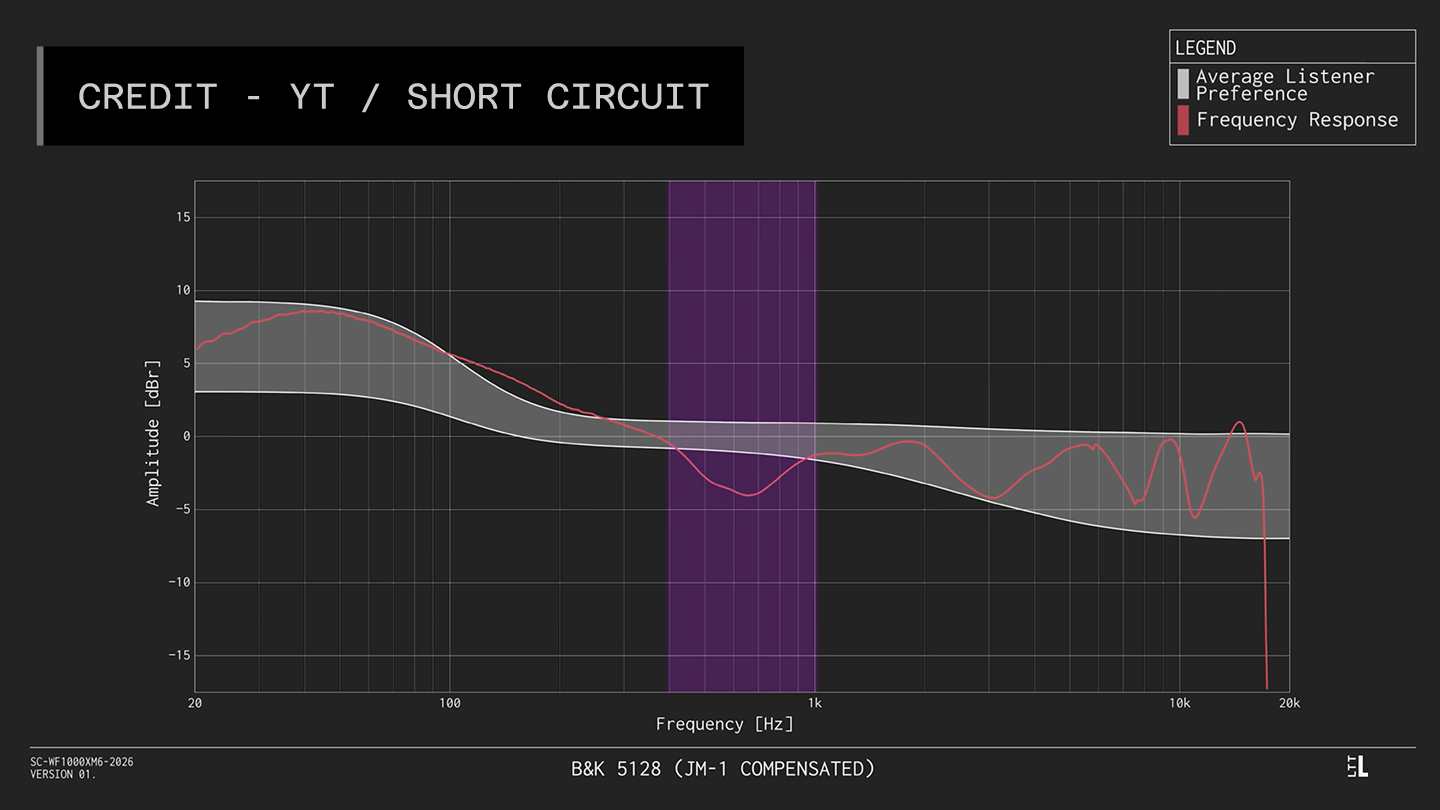
The vocals are also kinda recessed on the AirPods Pro 3 and they sound very thin like they are lacking body to the vocals. AirPods Pro 3 don't sound muddy, they are quite opposite of muddy. The clarity is almost too high to sound natural. The soundstage and instrument separation is okay though. On the contrary, Sony WF-1000XM6 buds have a more balanced, relaxed and warm sound signature. However, you will lose some details in the midrange because of the wide dip around 600 Hz region. The upper-bass area around 150 Hz is a little over-boosted on the WF1000XM6 buds, this can cause the lower-mids sound a bit unnatural in some particular tracks but not a huge problem.
So, both earbuds have faults in their sound signature, more on the AirPods Pro 3. The crazy thing about Apple is the fact that you are stuck with their default over-boosted tuning where Sony offers a pretty good custom eq in their app. You can change the sound of Sony WF-1000XM6 buds to your taste by quite a bit. Overall, I think the Sony XM6 buds have a better sound signature that is also customizable and not gonna hurt your ears. The AirPods Pro 3 sounds okay but not good for longer listening as it can hurt your ears. I wanna point out that on a quick listen or for some particular songs, the AirPods Pro 3 might sound better, but it's a narrow scenario.
Both earbuds have great Active Noise Cancellation and transparency. The AirPods Pro 3 still have the best transparency mode like it used to be. On the contrary, the Sony WF-1000XM6 buds have the best Active Noise Cancellation. But Apple with the AirPods Pro 3 has caught up quite a bit in the ANC game. Both have God-tier ANC that will take you by surprise. It's quite close but the Sony XM6 buds still wins in the ANC category. The foam eartips help out with the noise cancellation on the Sony buds vs AirPods Pro 3's foam-infused eartips that is less helpful.
Sony calls it Ambient Sound Mode vs Apple calls it Transparency Mode. Sony has more steps and precise controls on the intensity level. However, AirPods Pro 3 still have the best transparency that sounds very natural, almost like you have nothing on your ears. Sony WF-1000XM6 buds also have very good performance in this category but still not quite there - catching up with Apple faster. In the Ambient Sound Mode Sony XM6 buds sound kinda compressed, low-res and artificial. The AirPods Pro 3 doesn't have that artificial low-res feeling. So, Apple wins in transparency but Sony wins in ANC.
There is a significant improvement in the mic quality too. In average scenarios where there isn't a lot of noise present, the mic on the new AirPods Pro 3 delivers a more detailed and less compressed sound. This shows a very good improvement over the previous AirPods Pro 2's mic. Check out this video from Dave2D that demonstrates the improvements in the mic quality. There are 3 mics in each bud on AirPods Pro 3 vs 4 mics in each on the Sony XM6 buds. Even though Sony's new XM6 buds have 1 more microphone in each buds, the AirPods Pro 3 offers a noticeably better call quality. There are more artifacts and interference on the XM6 buds' microphone performance. The Sony WF-1000XM6 buds try to reduce background noise during calls, but that processing comes out as low-res and artificial. So, AirPods Pro 3 takes the crown here for microphone performance.
The battery life on the new AirPods Pro 3 is also being improved by 2 hours. From just the bud's built-in battery with ANC enabled, the AirPods Pro 3 offers 8-hours of music playback vs AirPods Pro 2's 6-hours of playback at around 50% volume. With the case, you get a total 24-hours on the AirPods Pro 3 and it's exactly the same 24-hours total on the Sony WF-1000XM6 buds too. Here both the Apple and Sony buds offer 8 hours of playback using just the buds, and their cases provide 2 more additional full charges. The AirPods Pro 3 and the Sony XM6 buds have bigger cases than their last generation models. This is kinda a downgrade on both, but the AirPods Pro 3 has better battery life to case size ratio. Only the Sony 1000XM6 buds come with a charging cable in the box and both have wireless charging.
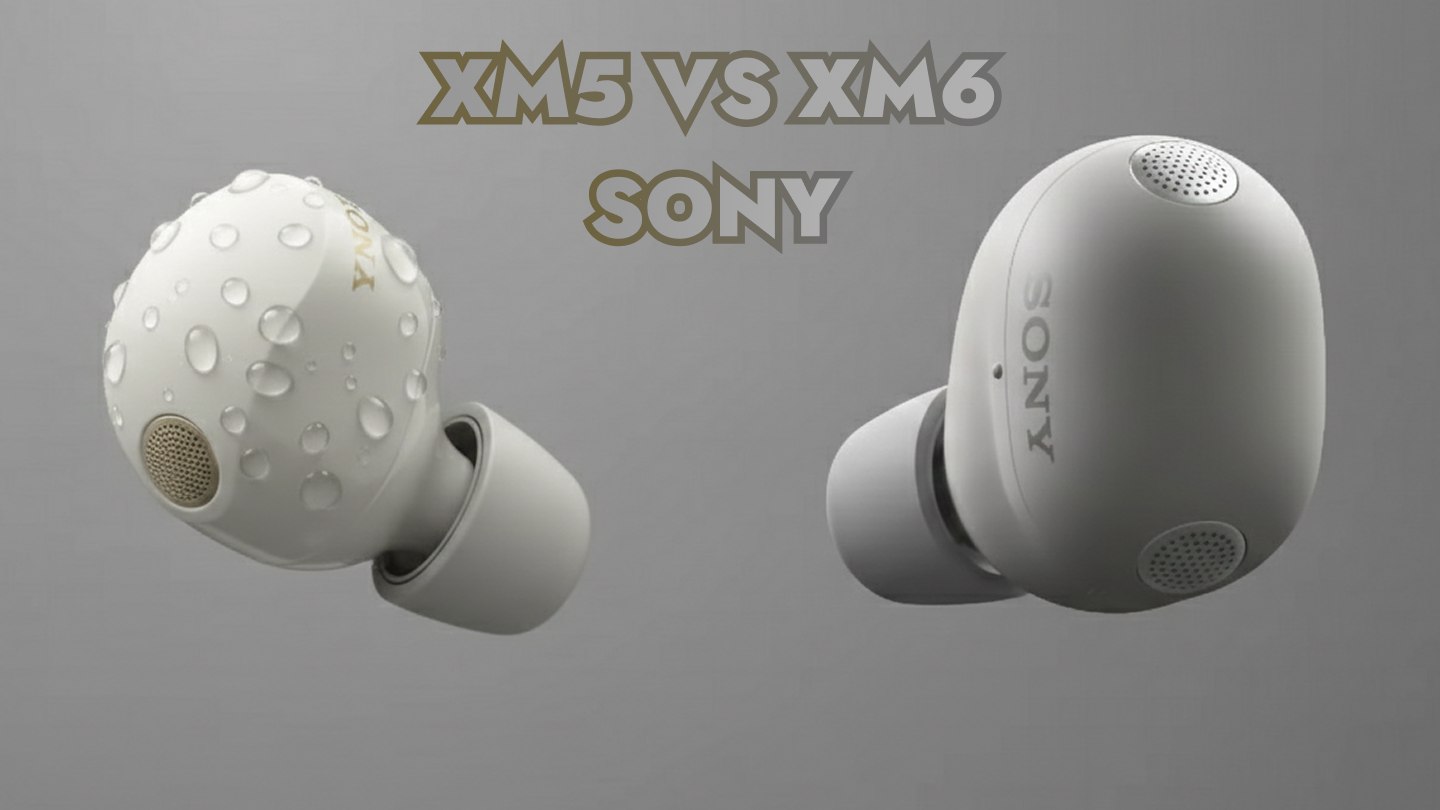

Check out those articles from above, you can click on those linked images to read the articles. A while ago I published a review of the Samsung Galaxy A14 5G smartphone, check that out if you are into budget phones. In case you are interested in portable speakers, I compared 3 Boombox type speakers from 3 different brands such as Soundcore, Tribit and JBL. So don't forget to also check out that detailed comparison article about the JBL Boombox 3 vs Tribit Stormbox Blast vs Soundcore Boom 2 Plus.
With the AirPods Pro 3, Apple kept the retail price same at $250, which is great in my opinion. But it's not the same with Sony buds. The new WF-1000XM6 buds have a $330 retail price where the previous XM5 buds were priced at $300. So, this is really a tough situation considering everything. I think if you are already hooked on Apple ecosystem, then go with the AirPods Pro 3. The sound is just good by default, it could have been great with a little tweak. If you are tech savvy, maybe you can use a third party equalizer to reduce the over-boosted lows and highs. The price of AirPods Pro 3 is really compelling considering great ANC and transparency.
I think that the default sound on the Sony WF-1000XM6 buds is more balanced, which comes out as a bit better than Apple's tuning this time. However, the AirPods Pro 3 has an underlying richness that gets kinda overpowered with the boosted highs. So, I prefer the default sound of Sony, which is also custom tunable using the Sony Sound Connect app. If you care about sound a lot, you should buy the Sony XM6 buds even though it has a higher price. For more information you can check out the official page of Sony WF-1000XM6 and AirPods Pro 3 earbuds.
Also, please check out the JBL Charge 6 vs Charge 5 story for highlights. IF you're interested in mid-sized portable speakers, check my JBL Charge 6 vs Bose SoundLink Plus article. The JBL Charge 6 did better in the head-to-head comparison.